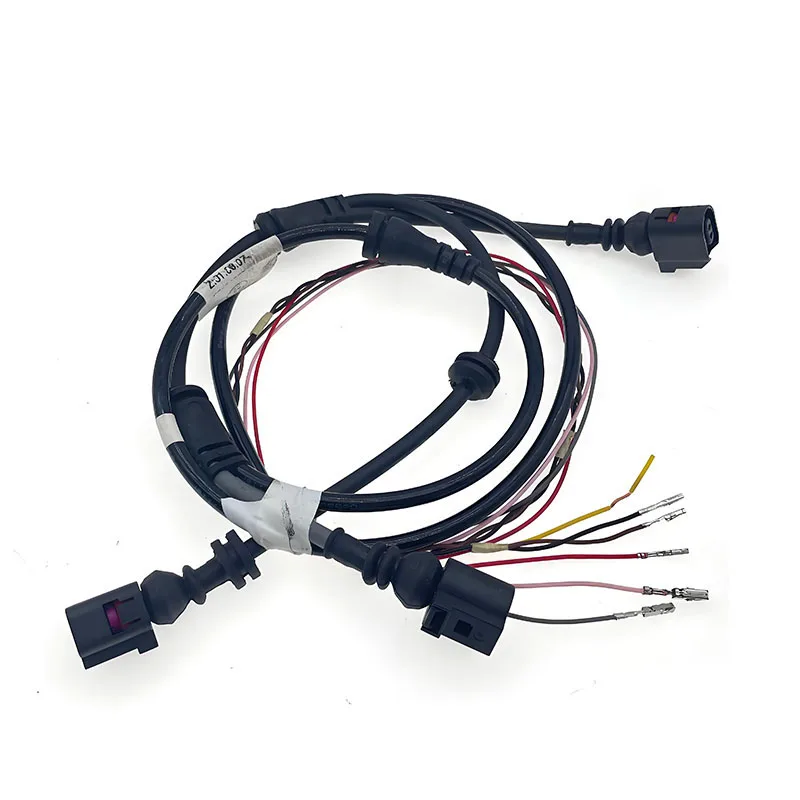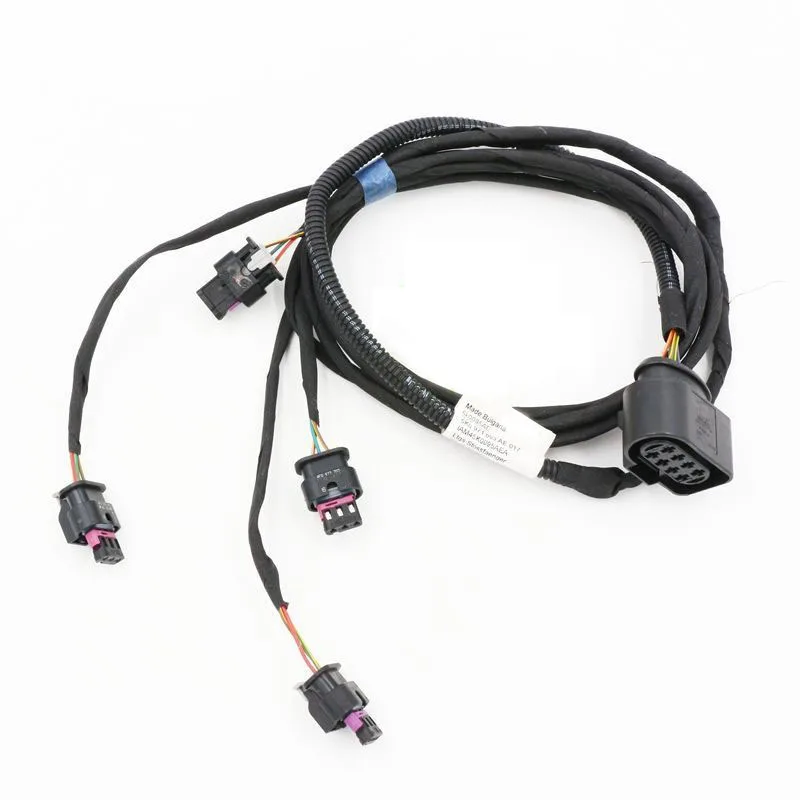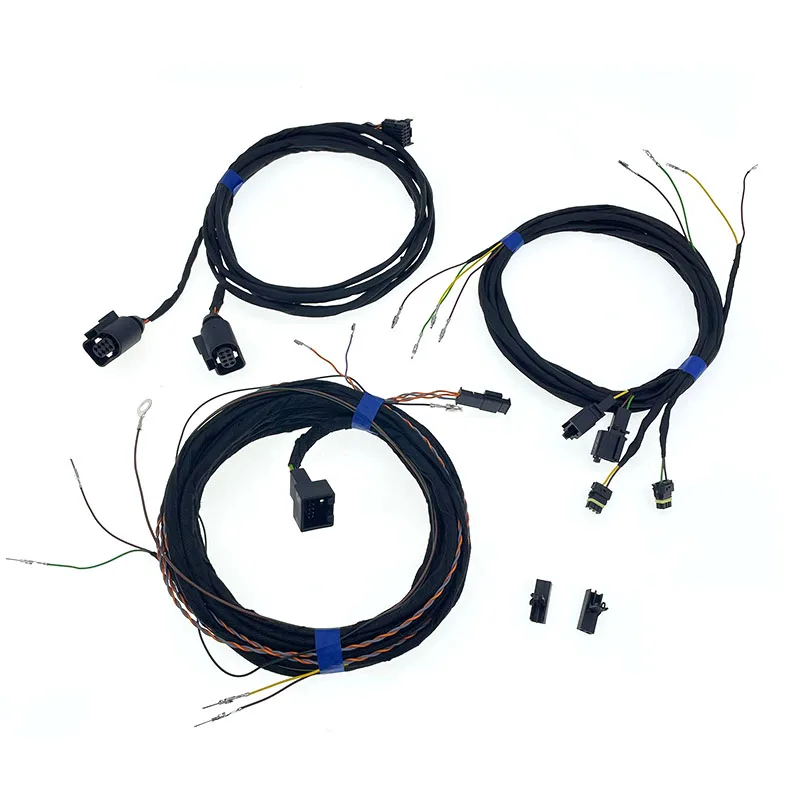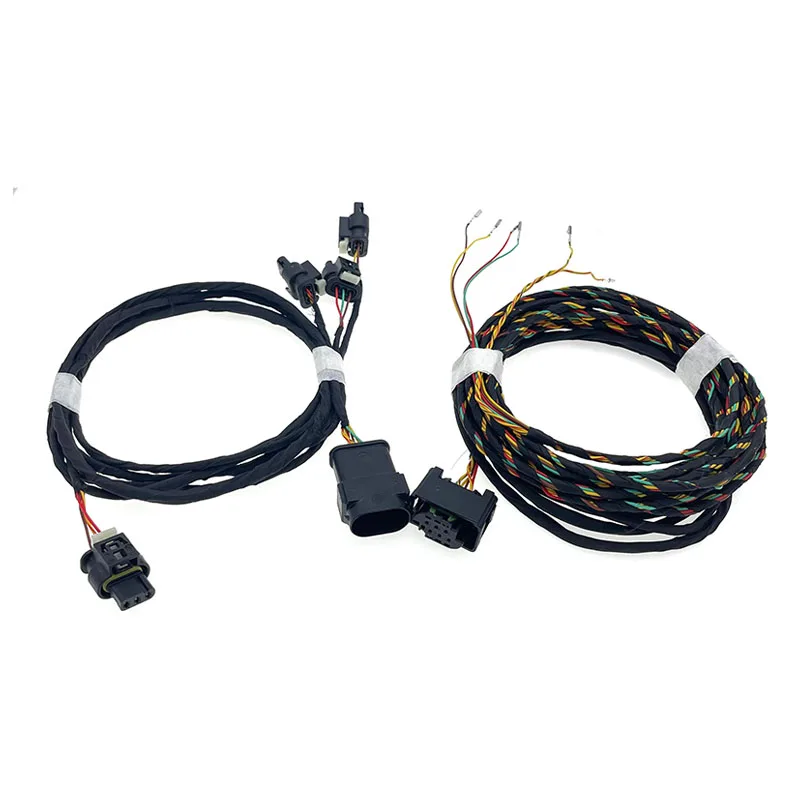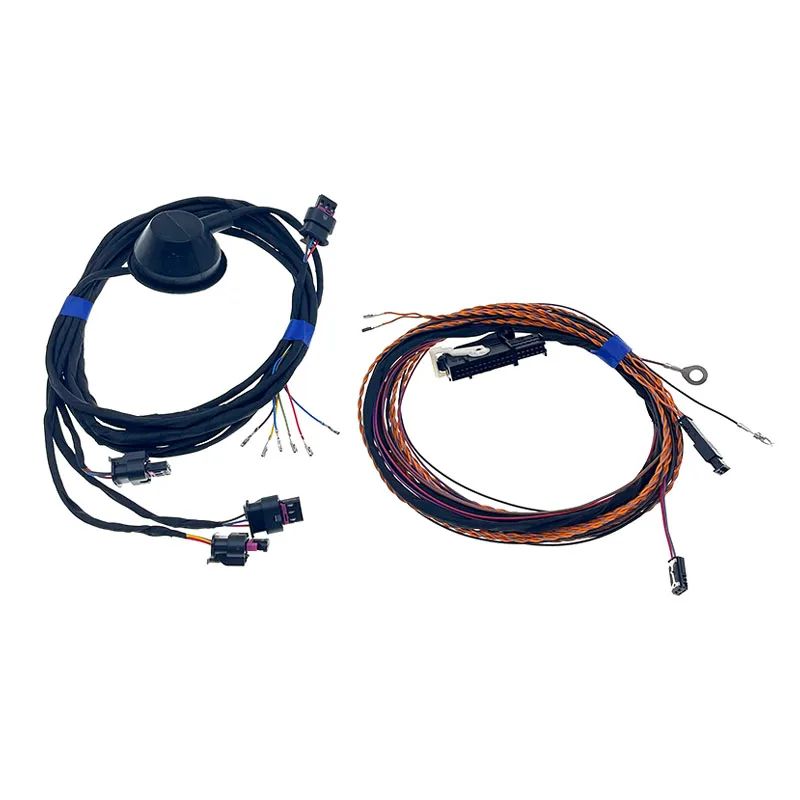
Upgrading to a high-resolution rear camera on VW Group MQB platform vehicles requires a dedicated harness cable that bridges factory connectors to aftermarket 4K camera systems. The 4K Rear OPS Parking Kit Harness Cable provides plug-and-play connectivity for Golf 7 MK7, Passat B8, Polo 6C, Octavia A7, and Superb models, eliminating wire splicing while maintaining proper signal transmission for optical parking systems.
MQB Platform OPS Architecture
Volkswagen's MQB (Modularer Querbaukasten) architecture shares electrical infrastructure across multiple brands including VW, Škoda, and SEAT. The rear Optical Parking System uses dedicated 4-pin connectors with specific pinout configurations: power supply (typically 12V), ground, composite video signal, and trigger wire. Factory harnesses differ between base models with analog cameras and premium trims with digital systems, making compatibility verification essential before purchase.
The OPS harness cable addresses voltage requirements for aftermarket 4K cameras, which often need stable 12V input rather than the variable power some factory systems provide. Cable gauge matters significantly—thin wiring causes voltage drop over the 4-5 meter run from trunk to dashboard module, resulting in flickering displays or incomplete camera initialization. Quality harnesses use 20-22 AWG wiring with shielded construction to prevent electromagnetic interference from adjacent power cables.
Compatibility Across Model Years
Golf 7 MK7 models from late 2012 through 2019 share identical connector types at both camera mounting points and RCD infotainment interfaces. However, facelifted models after 2017 may have updated gateway modules requiring VCDS coding to enable third-party camera signals. Passat B8 uses the same harness standard but positions the gateway module differently, requiring additional cable length that some generic harnesses lack.
Octavia A7 and Superb models use identical pinouts to Golf 7 but feature different trunk lid wiring paths. The harness must route through factory grommets without pinching—a common failure point causing intermittent connections. Polo 6C shares the MQB connector standard but uses a smaller dashboard module with tighter clearances, making cable management critical during installation.
4K Camera Signal Requirements
Standard definition factory cameras output composite video at 480p resolution, while 4K aftermarket systems generate digital signals requiring HDMI or LVDS transmission protocols. The harness cable must include signal conversion circuitry or connect to an external converter box positioned near the camera. Without proper impedance matching (typically 75 ohms for video signals), image quality degrades with ghost images or color bleeding visible during low-light conditions.
True 4K resolution (3840×2160 pixels) demands significantly higher bandwidth than factory systems provide. Most MQB-compatible harnesses actually facilitate 1080p transmission, marketed as "4K-ready" but limited by factory display capabilities. Infotainment screens in pre-2019 MQB vehicles max out at 800×480 pixel resolution, creating a bottleneck regardless of camera quality. Verifying your specific head unit's maximum input resolution prevents investing in unnecessarily high-spec cameras.
Installation Considerations
Proper harness installation begins with disconnecting the battery negative terminal to prevent gateway module damage from hot-plugging video connections. Factory camera removal requires carefully releasing spring clips on Golf and Octavia models, while Passat B8 uses T20 Torx fasteners. The replacement harness connects between the new camera's pigtail and the factory trunk lid connector—typically a green or brown 4-pin Quadlock connector.
Routing the harness through trunk weatherstripping requires specific technique: fold weatherstripping outward rather than forcing cable underneath to prevent water intrusion. Use cable ties every 30cm along factory wire bundles, avoiding tight bends that stress solder joints inside connectors. The dashboard end connects to the gateway module or directly to RCD infotainment units depending on model year—consult wiring diagrams specific to your production date.
Common Fitment Issues
Connector keying prevents reversed installation, but some aftermarket harnesses use universal shells that physically fit multiple connector types with incorrect pinouts. Cross-referencing part numbers against VW/Škoda ETK (Electronic Parts Catalog) listings ensures proper pin assignments. Common symptoms of incorrect harnesses include cameras powering on but displaying black screens, reverse gear detection failing, or parking guideline overlays misaligning with actual wheel paths.
Cable length mismatches cause installation headaches—measure the exact run from your trunk camera location to dashboard before ordering. Golf variants with sunroofs have different headliner routing than base models, adding 40-60cm to required length. Insufficient slack at connection points creates tension that pulls connectors loose over time from vibration and temperature cycling.
Recommended Products
Hand-picked accessories related to this article
OEM vs Aftermarket Cable Quality
Genuine VW harnesses (part numbers starting with 5G0, 3G0, or 5Q0 depending on model) use tin-plated copper conductors with triple-layer insulation rated for -40°C to +85°C operation. Aftermarket alternatives often substitute aluminum-core wiring that increases resistance and fails prematurely in cold climates. Connector housings should replicate OEM Delphi or TE Connectivity designs with positive locking tabs—cheap clones use friction-fit only, leading to intermittent connections.
Shielding construction separates quality harnesses from budget options. Proper RF shielding uses braided copper mesh with 85%+ coverage, twisted pair construction for signal wires, and ferrite beads at both terminations. Unshielded cables pick up interference from LED tail lights, fuel pump modules, and rear wiper motors—all positioned near typical camera mounting points on MQB vehicles.
Coding and Configuration
Even with correct physical installation, MQB vehicles often require gateway coding via VCDS (VAG-COM Diagnostic System) or OBDeleven tools. Long coding of module 5F (Multimedia) enables aftermarket camera signals by modifying byte 04, bit 0 from "0" (OEM camera only) to "1" (allow external input). Some harnesses include documentation for required coding changes, but many leave buyers troubleshooting blind.
Parking guideline calibration happens through hidden menus accessible by long-pressing the "Setup" button during reverse gear engagement. Adjust overlay positioning to match your vehicle's actual turning radius—default settings assume OEM camera mounting heights and lens angles that aftermarket cameras rarely replicate exactly.
Key Takeaways
- Verify connector pinouts match your specific model year before purchasing—MQB platform uses multiple harness variants
- Measure exact cable routing distance including weatherstripping paths and headliner runs
- Quality harnesses use shielded construction with 20-22 AWG copper wiring, not aluminum
- Factory displays limit effective resolution regardless of camera specifications—verify head unit capabilities
- Gateway coding via VCDS may be required to enable aftermarket camera signals
Frequently Asked Questions
Do all MQB platform vehicles use identical OPS harness connectors?
While MQB models share basic connector types, pin assignments and cable lengths vary between brands and model years. Golf 7, Octavia A7, and Passat B8 use compatible connectors but different routing paths requiring specific harness lengths. Always verify compatibility with your exact model and production date.
Can I use a standard RCA video cable instead of a dedicated OPS harness?
Standard RCA cables lack proper shielding and connector types for automotive environments. Factory connectors use Quadlock designs with locking mechanisms that RCA adapters cannot replicate. Additionally, voltage supply and trigger wires integrate into OPS harnesses—separate wiring would be required, negating any cost savings.
Why does my aftermarket camera display in black and white despite being a color unit?
This typically indicates incorrect video signal format—PAL vs NTSC mismatch between camera and head unit. Some harnesses don't maintain proper signal standards. Verify your infotainment system's video input format (usually PAL for European models) matches camera output settings, adjustable via small switches on camera housings.
Will installing an aftermarket camera harness affect my vehicle warranty?
Modifications to factory electrical systems can impact warranty coverage for related components. However, plug-and-play harnesses that don't require cutting factory wiring typically present minimal risk. Document original configuration and retain factory camera for potential reinstallation before warranty service visits.
This article was produced through comprehensive AI-powered research and editorial tools. While we strive for accuracy, all vehicle modifications, product purchases, and installation decisions are undertaken entirely at your own risk and responsibility. We recommend consulting a qualified automotive professional before making any changes to your vehicle.