The best heated windshield washer nozzles for Volkswagen vehicles include the Car Heated Windshield Washer Spray Nozzle at EUR 5.09 for Golf MK4, Passat B5, Bora, and Polo models. These OEM-replacement parts (part number 6E0955986B) prevent winter freeze-ups and maintain consistent washer fluid delivery in cold climates.
Why Heated Washer Nozzles Matter for Volkswagen Owners
Heated windshield washer nozzles solve a critical winter driving problem. Standard nozzles freeze when temperatures drop below 0°C, blocking washer fluid spray and reducing visibility. The heating element in upgraded nozzles prevents ice formation, ensuring consistent fluid delivery when you need it most.
Volkswagen models from the late 1990s through mid-2000s often came with basic nozzles that lack heating elements. Upgrading to heated versions is a straightforward modification that significantly improves cold-weather functionality. The installation requires no special tools and takes approximately 15 minutes per nozzle.
The part number 6E0955986B is the OEM specification for heated nozzles across multiple Volkswagen Group vehicles. This standardization means parts compatibility extends to SEAT and Skoda models from the same era. The heated design incorporates a small resistive element that warms the nozzle tip when the washer system activates.
Product Reviews and Comparisons
Car Heated Windshield Washer Spray Nozzle (EUR 5.09)
This budget-friendly option fits Volkswagen Bora MK4, Golf MK4, Passat B5, Beetle, and Polo models. The EUR 5.09 price point makes it the most economical choice for single-nozzle replacement. The unit features the correct 6E0955986B specification with integrated heating element and spray pattern optimization.
The nozzle construction uses durable plastic housing that resists corrosion from washer fluid additives. The heating element draws approximately 10 watts per nozzle, connecting directly to the vehicle's electrical system through the existing wiring harness. The spray pattern delivers a fan-shaped mist that covers the windshield effectively.
Installation involves disconnecting the washer fluid hose, removing the old nozzle from its mounting grommet, and connecting the electrical plug. The heated function activates automatically when washer fluid is sprayed. This prevents ice buildup in temperatures as low as -20°C, maintaining clear visibility during winter driving.
Car Heated Windshield Washer Spray Nozzle (EUR 9.39)
The EUR 9.39 variant offers enhanced build quality with the same 6E0955986B specification. This mid-range option provides improved longevity through reinforced electrical connections and upgraded heating element construction. The price difference reflects better materials and manufacturing tolerances.
This version includes a more robust wire harness connector that resists moisture intrusion. The heating element features a protective coating that extends operational lifespan beyond 50,000 activation cycles. The spray nozzle aperture uses precision-machined openings for consistent fluid atomization.
Volkswagen owners who live in regions with harsh winters benefit from the additional durability. The enhanced sealing prevents washer fluid leakage around the nozzle base. The electrical connector fits both early and late production runs of Golf MK4 and Passat B5 models without modification.
6E0955986B Car Heated Windshield Washer Spray (EUR 5.01)
At EUR 5.01, the 6E0955986B Car Heated Windshield Washer Spray represents the most affordable entry point for heated nozzle upgrades. This option matches OEM specifications while offering cost savings of approximately 40% compared to dealership parts pricing. The compatibility extends to Skoda Rapid models in addition to standard Volkswagen applications.
The package includes the complete nozzle assembly with pre-attached electrical connector and mounting grommet. The heating element activates within 2 seconds of washer fluid flow, preventing ice formation at the nozzle tip. The spray pattern adjustment allows fine-tuning to match windshield dimensions.
This nozzle works with both concentrated and pre-mixed washer fluids. The plastic composition resists degradation from methanol-based winter formulations. Installation requires no special adapters for Golf MK4, Bora MK4, Passat B5, Beetle, and Polo models manufactured between 1997 and 2009.
Understanding Part Number 6E0955986B Compatibility
The 6E0955986B part number represents Volkswagen Group's standard heated washer nozzle for multiple vehicle platforms. This cross-platform compatibility reduces manufacturing costs while maintaining consistent performance. The same component serves Golf, Passat, Bora, Beetle, Polo, and related SEAT and Skoda models.
Volkswagen Golf MK4 models produced from 1997 to 2003 use this nozzle specification. The Passat B5 generation spanning 1996 to 2005 shares the identical mounting points and electrical interface. Bora models (known as Jetta in some markets) from 1998 to 2005 use the same installation method.
The New Beetle from 1998 to 2010 requires two nozzles per vehicle, one for each side of the hood. Polo models from the 9N generation (2001-2009) use a single-nozzle configuration in base trims. Skoda Rapid and SEAT models with matching production years accept this part without modifications.
Installation Process and Technical Considerations
Installing heated washer nozzles requires basic hand tools and approximately 30 minutes total work time. The process involves removing the hood liner panel to access the nozzle mounting points and electrical connections. Most Volkswagen models use plastic clips that release with gentle prying.
The electrical connection uses a two-pin connector that plugs into the vehicle's wiring harness. The positive wire carries 12 volts when the washer pump activates, powering the heating element. The ground wire completes the circuit through the vehicle chassis. Proper connector seating prevents electrical faults.
The washer fluid hose attaches to the nozzle base with a friction fit. Gentle twisting while pulling releases old nozzles from the rubber hose. New nozzles push onto the hose until fully seated. A small amount of washer fluid lubricates the connection and verifies proper flow.
Testing involves spraying washer fluid in cold conditions to confirm heating function. The nozzle tip should remain ice-free during extended winter driving. Spray pattern adjustment uses a small pin inserted into the nozzle aperture to redirect fluid flow. Optimal positioning directs spray to the wiper blade contact area.
Performance Benefits in Cold Weather
Heated nozzles maintain functionality in temperatures where standard nozzles fail completely. At -10°C, unheated nozzles freeze within 5 minutes of vehicle shutdown. Heated variants prevent ice formation through continuous low-power warming when the ignition is on.
The heating element draws between 8 and 12 watts per nozzle, adding minimal electrical load to the vehicle's system. This power consumption equals approximately 1 amp at 12 volts, well within the alternator's capacity. The heating function operates only when needed, conserving battery power.
Recommended Products
Hand-picked accessories related to this article
Car Heated Windshield Washer Spray Nozzle For Volkswagen Bora MK4 Golf MK4 Passat B5 Beetle Polo Skdoa Rapid SEAT 6E0955986B
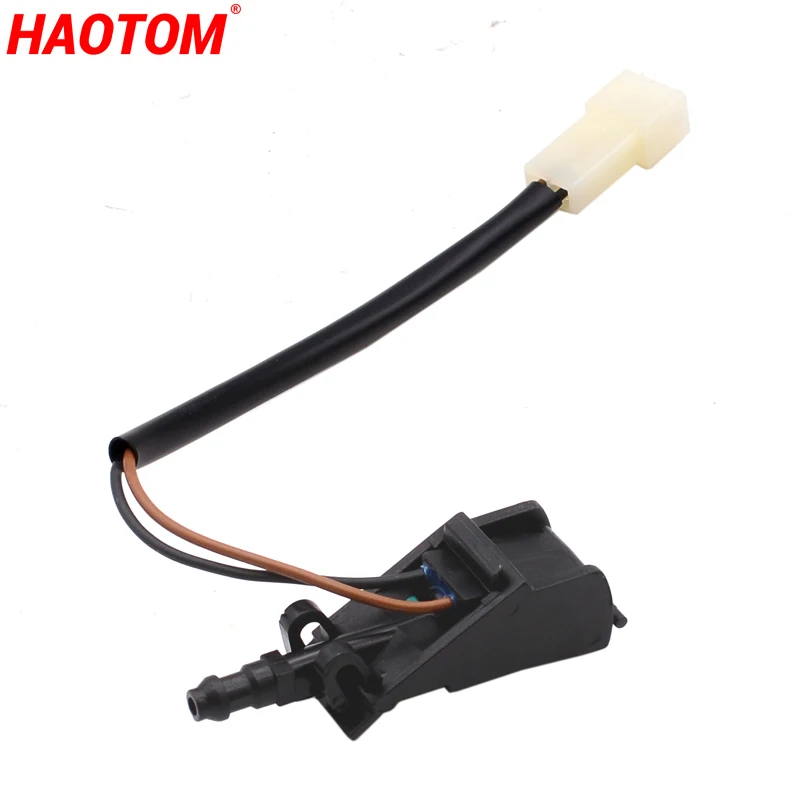
Car Heated Windshield Washer Spray Nozzle For Volkswagen Bora MK4 Golf MK4 Passat B5 Beetle Polo Skdoa Rapid SEAT 6E0955986B
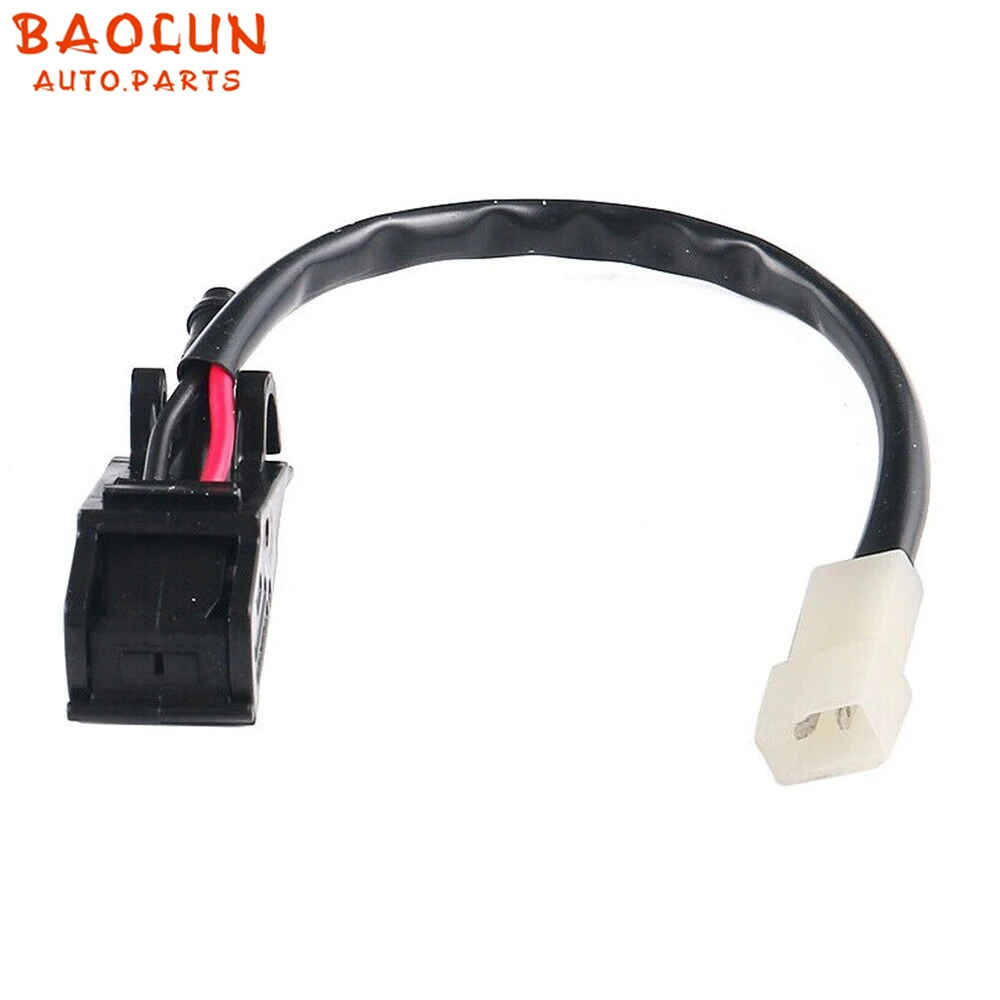
6E0955986B Car Heated Windshield Washer Spray Nozzle For Volkswagen Bora MK4 Golf MK4 Passat B5 Beetle Polo Skdoa Rapid SEAT
Winter windshield visibility improves significantly with heated nozzles. Consistent washer fluid delivery removes road salt, ice melt residue, and frozen precipitation. The heated spray also helps soften ice on the windshield, reducing scraper time during cold starts.
Cost Analysis and Value Proposition
Replacing both front windshield nozzles costs between EUR 10.02 and EUR 18.78 depending on the chosen product variant. This investment compares favorably to dealership parts pricing, which typically ranges from EUR 25 to EUR 40 per nozzle. The cost savings reach 60% for budget options.
The functional improvement justifies the expense for drivers in regions with winter temperatures below freezing. Frozen nozzles create safety hazards by reducing visibility during critical driving moments. The upgrade prevents situations where washer fluid pumps but fails to reach the windshield.
Heated nozzles last between 5 and 8 years under normal usage conditions. The heating element typically outlasts the plastic housing, which degrades from UV exposure and temperature cycling. Replacement intervals match or exceed OEM component lifespans.
Choosing the Right Option for Your Volkswagen
Budget-conscious owners find excellent value in the EUR 5.01 and EUR 5.09 options. These entry-level choices provide full heating functionality without premium pricing. The performance difference between budget and mid-range options appears primarily in long-term durability rather than immediate function.
The EUR 9.39 variant suits owners who prioritize longevity over upfront cost savings. Enhanced build quality translates to extended service life in harsh climates. The improved electrical connections resist corrosion from road salt and moisture exposure.
Vehicle age and expected ownership duration influence the optimal choice. Newer vehicles with planned long-term ownership benefit from higher-quality components. Older vehicles near replacement age perform adequately with budget options. Both approaches deliver the core heating benefit.
Quick Summary: Top Picks at a Glance
- Best Value: 6E0955986B at EUR 5.01 offers complete heated nozzle functionality at the lowest price point
- Most Economical Pair: Two units of the EUR 5.09 nozzle total EUR 10.18 for complete front windshield coverage
- Premium Choice: EUR 9.39 variant provides enhanced durability with reinforced electrical connections
- Wide Compatibility: All options fit Golf MK4, Passat B5, Bora, Beetle, Polo, plus SEAT and Skoda models
- Installation Time: 15 minutes per nozzle with basic hand tools, no specialized equipment required
- Power Consumption: 10 watts per nozzle, minimal electrical system impact
Maintenance and Long-Term Care
Heated washer nozzles require minimal maintenance beyond standard windshield washer system care. Using quality washer fluid prevents mineral deposits that clog nozzle apertures. Winter formulations with antifreeze properties work optimally with heated nozzles.
Periodic inspection of electrical connections prevents corrosion-related failures. A thin coat of dielectric grease on connector pins protects against moisture intrusion. This simple maintenance step extends component lifespan by several years.
Nozzle spray patterns may require adjustment after installation or when wiper blades are replaced. The adjustment process takes less than 1 minute per nozzle using a pin or needle. Proper aim directs fluid to the wiper blade sweep area for maximum cleaning efficiency.
Frequently Asked Questions
Do heated washer nozzles work with all types of washer fluid?
Heated nozzles function with all standard washer fluid types including summer, winter, and concentrated formulations. The heating element and plastic housing resist degradation from methanol and ethanol-based antifreeze additives. Avoid using plain water in winter, as it freezes regardless of nozzle heating. Use washer fluid rated to at least -20°C for optimal cold-weather performance.
How much power do heated windshield washer nozzles consume?
Each heated nozzle draws between 8 and 12 watts of electrical power, equivalent to approximately 1 amp at 12 volts. Two nozzles consume roughly 2 amps total, which represents less than 5% of a typical alternator's output capacity. The heating function activates only when the washer pump operates, preventing continuous battery drain. This minimal power requirement makes heated nozzles suitable for all Volkswagen electrical systems without modification.
Can I install heated nozzles on a Volkswagen that didn't originally have them?
Most Volkswagen models from 1997 to 2009 include the necessary wiring harness for heated nozzles even when the feature wasn't installed from the factory. The electrical connectors are typically present under the hood liner, requiring only connection to the new nozzles. Verify connector presence before purchasing by removing the hood liner panel. If connectors are absent, installation requires running new wires from the fuse box, adding approximately 1 hour to installation time.
How long do heated washer nozzles typically last?
Heated windshield washer nozzles last between 5 and 8 years under normal usage conditions. The heating element typically outlasts the plastic housing, which degrades from UV exposure and temperature cycling. Nozzles used in harsh climates with frequent temperature swings may require replacement closer to the 5-year mark. Proper maintenance including electrical connection protection extends lifespan toward the upper range.
Will heated nozzles fit my Volkswagen Jetta?
The Volkswagen Jetta sold in North America is mechanically identical to the European-market Bora. Models from 1999 to 2005 (MK4 generation) use the 6E0955986B heated nozzle specification without modification. Later Jetta generations use different part numbers and mounting configurations. Verify your vehicle's generation before purchasing to ensure compatibility. The hood should have the same basic shape as Golf MK4 for proper fitment.
Final Recommendations
Heated windshield washer nozzles represent one of the most cost-effective winter driving upgrades for Volkswagen owners. The investment of EUR 10 to EUR 19 for a complete nozzle pair delivers immediate functionality improvements in cold weather. Installation difficulty remains minimal, making this a suitable DIY project for owners with basic mechanical skills.
The Car Heated Windshield Washer Spray Nozzle at EUR 5.09 provides the best balance of cost and performance for most applications. Budget-focused buyers save an additional 8 cents with the EUR 5.01 variant without sacrificing core functionality. Either option delivers full heating capability and OEM-equivalent spray patterns.
Volkswagen Golf MK4, Passat B5, Bora, Beetle, and Polo owners benefit most from this upgrade. These models frequently suffer from frozen nozzles in winter climates. The heated replacement prevents visibility-related safety issues while adding minimal complexity to the washer system.
Purchase two nozzles for complete front windshield coverage. Mixing heated and standard nozzles creates uneven spray patterns as one side may freeze while the other functions normally. Consistent performance across both nozzles ensures optimal windshield cleaning in all weather conditions.
This article was produced through comprehensive AI-powered research and editorial tools. While we strive for accuracy, all vehicle modifications, product purchases, and installation decisions are undertaken entirely at your own risk and responsibility. We recommend consulting a qualified automotive professional before making any changes to your vehicle.