Retrofitting advanced driver assistance system (ADAS) components like lane keeping cameras and blind spot detection requires OEM-compatible parts with proper part numbers and supporting wiring harnesses. These systems integrate with vehicle CAN bus networks and require coding to function correctly with existing safety modules.
Lane Keeping Assist Camera Systems
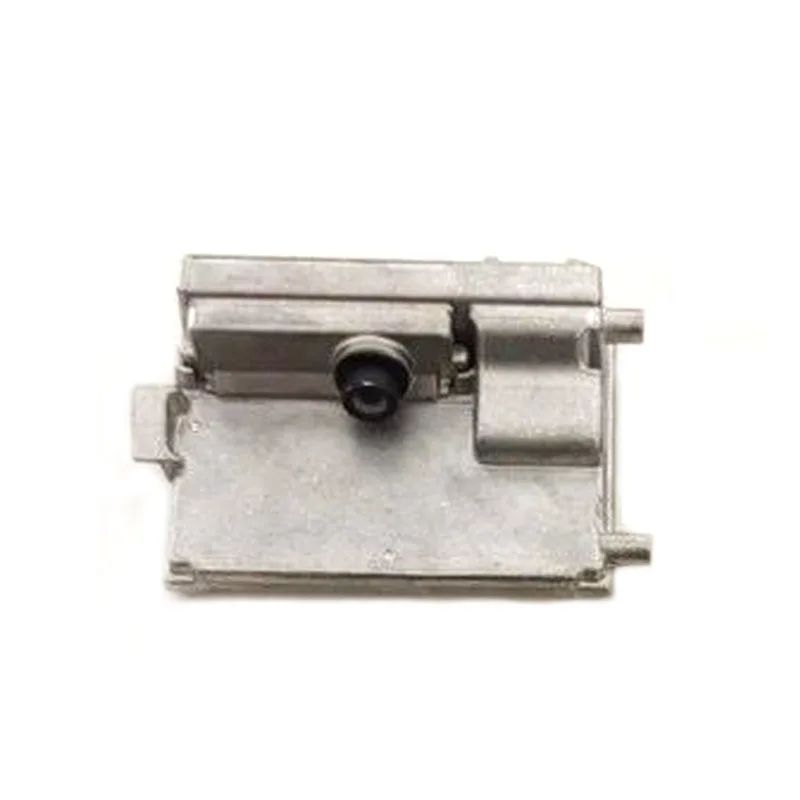
Lane keeping assist cameras mount behind the windshield near the rearview mirror and monitor road lane markings. The New 2021 Front camera lane keeping camera For ID.4 (1EA980653) represents the latest generation ADAS camera for Volkswagen's electric platform. This camera uses advanced image processing to detect lane departures and provides steering corrections through the vehicle's electric power steering system. The part number 1EA980653 is VW's OEM designation for ID.4 applications.
For Golf 7 MK7 retrofits, the Lane Keeping Assist Camera with Program For Golf 7 MK7 (5Q0980653F/E/G) offers three different revision levels indicated by the suffix letters. The 5Q0980653G represents the newest revision with improved night vision capabilities and faster processing speeds. These cameras require VCDS or OBDeleven coding to activate the lane assist function in the vehicle's central control module. The camera includes pre-programmed calibration data specific to Golf 7 windshield angles and mounting positions.
Camera Installation Requirements
Lane keeping cameras require precise windshield mounting with strict angular tolerances. The camera must align within 0.5 degrees of the vehicle centerline to ensure accurate lane detection. After installation, a static calibration procedure using alignment targets or dynamic calibration through driving on marked roads is mandatory. Most systems require 15-20 minutes of highway driving with clear lane markings for initial learning.
Power supply for these cameras typically draws from the interior lighting circuit or dedicated ADAS power module. Voltage requirements range from 9-16V DC with current draw between 150-300mA during operation. The camera connects to the vehicle's CAN bus network through a dedicated gateway module that translates image data into steering correction commands.
Blind Spot Detection Components
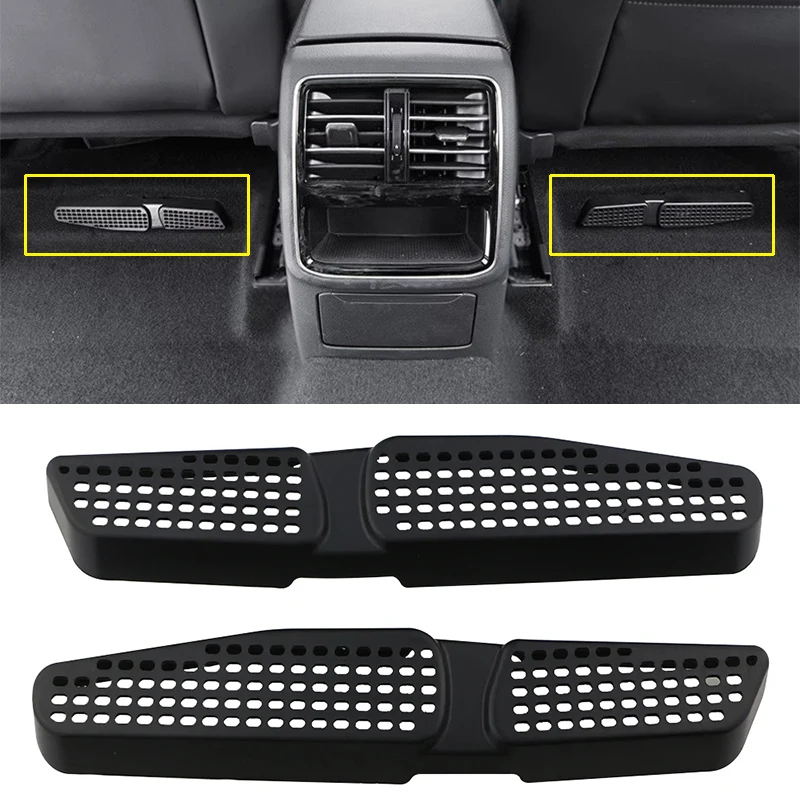
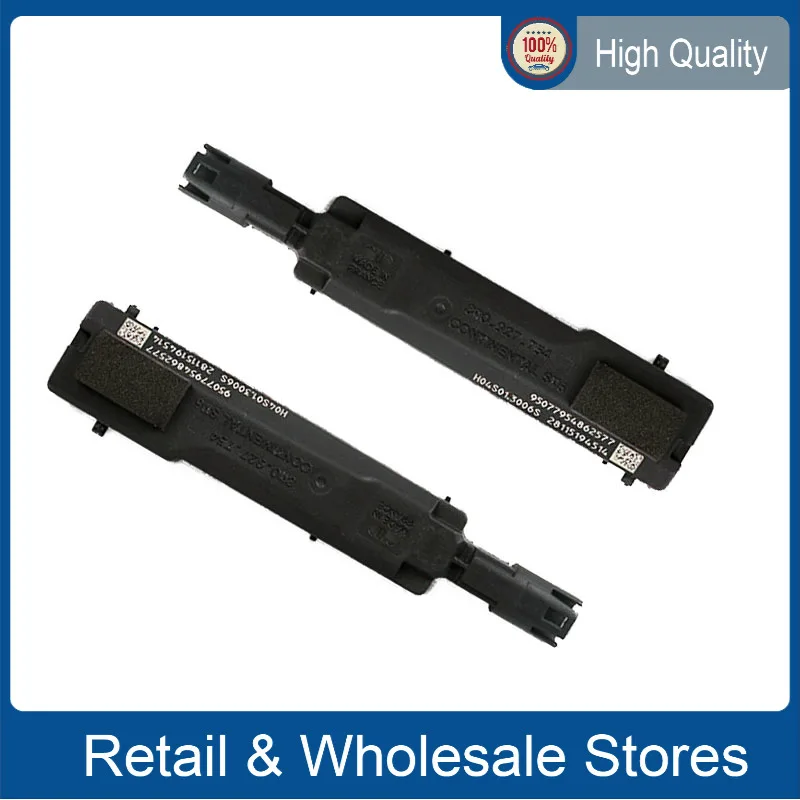
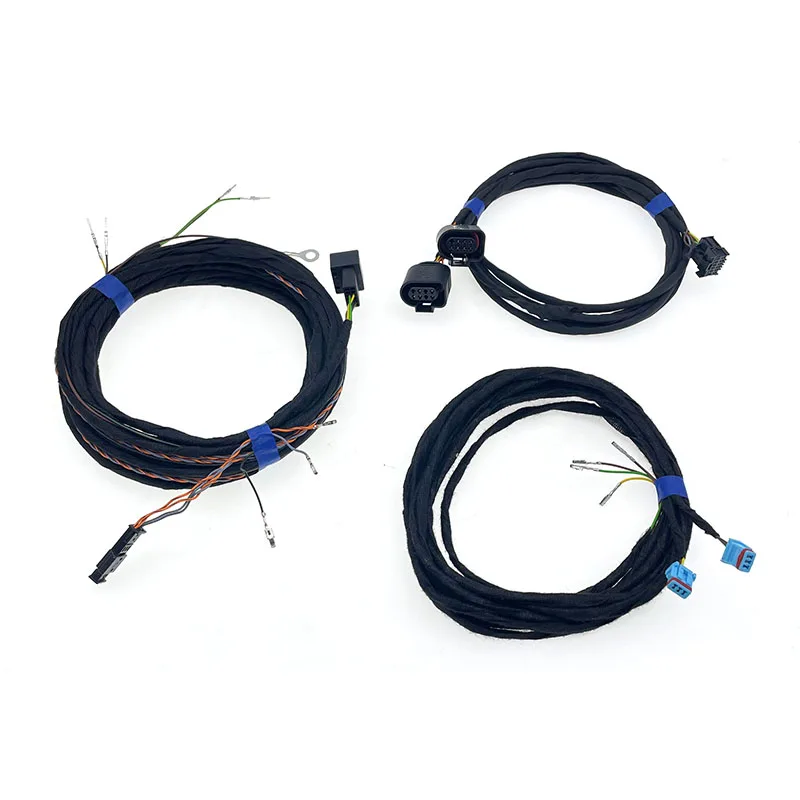
Blind spot monitoring systems use radar sensors mounted inside rear bumper corners or door mirror housings. The FOR VW ID 3 LANE CHANGE SIDE SYSTEM Blind Spot Assist Wire Cable Harness provides the essential wiring infrastructure to connect radar modules to the vehicle's main harness. This harness includes shielded twisted-pair cables for radar signal integrity and separate power conductors rated for automotive environmental conditions.
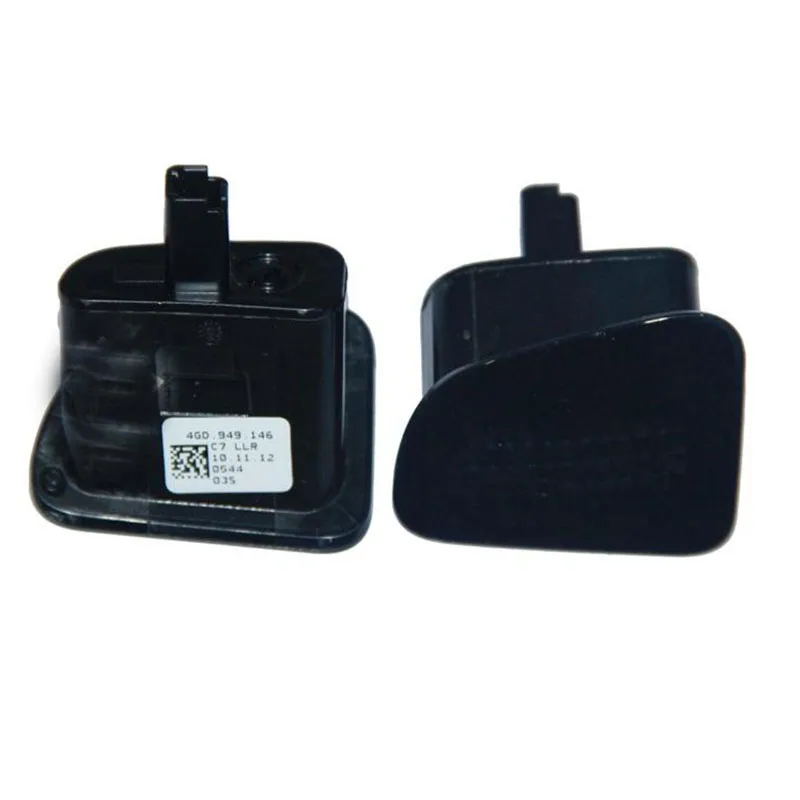
The Lane Change Blind Spot Side Assist Led Light For A6 C7 (4GD949145/4GD949146) represents the visual warning component that illuminates in the door mirror housing when vehicles enter the blind spot zone. Part numbers 4GD949145 and 4GD949146 designate left and right side assemblies respectively. These LED modules operate at 12V nominal voltage and feature amber warning LEDs visible in daylight conditions up to 100,000 lux ambient lighting.
Radar Sensor Technology
Blind spot radar sensors operate in the 24GHz frequency band with detection ranges from 0.5 to 7 meters. Modern systems use digital signal processing to distinguish between stationary objects, approaching vehicles, and overtaking traffic. The sensors update target tracking at 50-100Hz refresh rates to provide real-time warnings. Installation requires specific mounting angles with the sensor face perpendicular to the vehicle's longitudinal axis within 2 degrees tolerance.
Wiring Harness Specifications
ADAS wiring harnesses use automotive-grade conductors with temperature ratings from -40°C to +125°C. Shielding effectiveness must exceed 80dB to prevent electromagnetic interference from affecting sensor signals. Connector housings feature water-resistant seals rated to IP67 or higher for components exposed to wheel well environments. Wire gauge typically ranges from 20-22 AWG for signal conductors and 18 AWG for power supply lines.
Harness routing requires careful planning to avoid high-temperature zones near exhaust components and moving parts in suspension systems. Proper strain relief at connector interfaces prevents vibration-induced wire fatigue. Cable ties must be positioned every 150-200mm along the harness length with specific attachment points to body structure using factory mounting locations.
Coding and Calibration Procedures
After hardware installation, vehicles require software coding to activate ADAS functions in the central gateway and instrument cluster modules. This involves changing byte values in adaptation channels using diagnostic tools with manufacturer database access. For VW and Audi systems, long coding strings typically require 10-15 byte changes across multiple control modules including steering assist, ABS, and body control units.
Recommended Products
Hand-picked accessories related to this article
SaleNew 2021 NEW Front camera lane keeping camera For ID.4 High Quality Camera 1EA980653 1EA 980 653
 Sale
SaleFOR VW ID 3 ID.3 ID3 LANE CHANGE SIDE SYSTEM Blind Spot Assist Wire Cable Harness
 Sale
SaleLane Keeping Assist Camera with Program For for Golf 7 MK7 5Q0 980 653 F E G 5Q0980653F or 5Q0980653E or 5Q0980653G
 Sale
SaleLane Change Blind Spot Side Assist Led Light For A6 C7 4GD949145 4GD949146
Camera calibration targets must meet ISO 12233 standards for resolution testing with precise printed patterns. Static calibration requires level shop floors within 0.5-degree inclination and specific distances between vehicle and target boards. Dynamic calibration algorithms need consistent lane marking visibility for at least 10km of driving to achieve full system confidence levels.
Compatibility Considerations
ADAS retrofits require matching hardware generation with vehicle build dates. Early production vehicles may lack necessary CAN bus protocols or gateway processing capacity for newer camera modules. The ID.3 and ID.4 platforms use MEB electrical architecture with specific module addressing different from MQB platform vehicles like Golf 7. Direct part number verification against vehicle VIN using ETKA parts catalogs prevents compatibility issues.
Some vehicles require additional control modules beyond sensors and cameras. Lane assist systems need electric power steering with specific software capabilities. Blind spot systems may require dedicated radar control units not present in base trim levels. Checking control module part numbers through diagnostic scans identifies missing components before purchasing retrofit parts.
Quality Verification
OEM-equivalent ADAS components should include proper manufacturer markings and part number engravings on housings. Camera lenses must be glass rather than plastic to prevent distortion affecting image processing algorithms. Electrical connectors should match factory specifications with proper terminal locking mechanisms and seal integrity. Counterfeit components often exhibit poor lens coatings, incorrect connector keying, or missing calibration data.
Key Takeaways
- Lane keeping cameras require precise windshield mounting within 0.5-degree angular tolerance and mandatory calibration procedures
- Blind spot systems need complete wiring harnesses with shielded cables rated for automotive environments
- All ADAS retrofits require vehicle coding using diagnostic tools to activate safety functions in multiple control modules
- Part number verification against vehicle VIN prevents compatibility issues between different platform generations
- Quality OEM-equivalent components feature proper markings, glass lenses, and factory-specification electrical connectors
Frequently Asked Questions
Can I install lane keeping assist without professional calibration?
No. Lane keeping cameras require either static calibration with ISO-standard alignment targets or dynamic calibration through extended highway driving. Improper calibration causes false warnings or system failures to detect lane departures, compromising safety functionality.
What's the difference between 5Q0980653F, E, and G camera revisions?
The suffix letters indicate hardware revisions with progressive improvements. The G revision features enhanced night vision capabilities and faster image processing compared to earlier E and F versions. All three versions fit Golf 7 MK7 but require different coding in some control modules.
Do blind spot retrofit kits work without radar sensors?
No. The LED warning lights require radar sensor input to function. The wiring harness alone provides connectivity infrastructure but cannot generate blind spot warnings without actual radar modules detecting vehicles in adjacent lanes.
Will these ADAS components work on non-VW/Audi vehicles?
No. These components are engineered specifically for Volkswagen Group CAN bus protocols and control module architectures. Physical connector types, electrical pinouts, and communication protocols are incompatible with other manufacturers' vehicles without extensive modification.
This article was produced through comprehensive AI-powered research and editorial tools. While we strive for accuracy, all vehicle modifications, product purchases, and installation decisions are undertaken entirely at your own risk and responsibility. We recommend consulting a qualified automotive professional before making any changes to your vehicle.